
There are two types of bagging scales based on how the product is weighed: gross weigh scales and net weigh scales. We provide both types of bagging scales here at Inpak Systems, along with a host of other types of bag-filling equipment. In today’s blog we’re going to give you the rundown on each of these bagging scales, highlighting their benefits and the differences between them.
Gross Weigh Bagging Scales
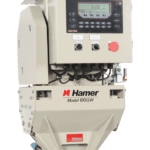
With gross weigh scales, the bag is hung on the scale spout and the bag weight is zeroed out. As the product is added to the bag, the bag is weighed. When the desired weight is achieved, the bag drops off the spout. Here are some traits of gross weigh baggers:
- Less expensive than net weigh scales.
- Potentially more accurate with certain non-free-flowing products, which might become stuck in a net weigh scale’s weigh hopper.
Net Weigh Bagging Scales
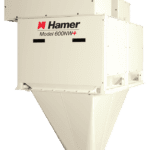
With a net weigh scale, the product is first loaded into a weigh hopper. When the desired weight is achieved, the weight hopper’s gate opens and the product is dumped into the bag. Here are some traits of net weigh baggers:
- More expensive due to the additional weigh hopper and control valve components.
- Provide a faster throughput because, while the operator is closing the last bag, the product for the next bag is being weighed out into the weigh hopper.
- Typically more accurate because there is less product-free fall distance.
Both types of scales are available with a fast bulk and slow dribble product feed to achieve the best accuracy.
Find Bagging Scales at Inpak Systems
For more specific recommendations for your bagging scales, contact us at 1-608-221-8180 or email us at [email protected]. This is the first blog in a series detailing the different options you have when it comes to bag filling. To read the other parts, follow the buttons below: