
INPAK SYSTEMS offers several commercial hot air bag sealers which can be free-standing, mounted on a column, or incorporated in a bag filling/sealing system. For bags weighing more than one pound, a synchronized support conveyor is usually used.
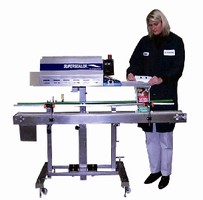 Hot air bag sealers are used to seal 1-8 mil thick pillow or tube-type polyethylene (PE) bags or pouches.
A hot air bag sealer uses two belts to pull the bag through the sealer. A heated manifold blows hot air on both sides of the bag and the belts then seal the bag closed. Options include: bag filler, bag top trimmer, bag top washer, embosser, coder, and a bag holding conveyor.
Benefits of Hot Air Bag Sealers from Inpak:
- Variety of models to meet your requirements
- Efficient and Dependable
- Precise Technology
Videos of hot air sealers in action.
Contact Us to receive more information about our product lines.
For more information on a specific hot air bag sealer, select one of the products below. Contact us if you need assistance choosing a hot air bag sealer for your needs.
Hot Air Bag Sealers FAQs
They use a jet of heated air to melt the plastic directly, followed by pressure rollers to weld the seal.
After the hot air nozzles melt the plastic, the bag passes through a set of water-cooled or air-cooled compression rollers.
Thermoplastics, including polyethylene (PE), polypropylene (PP), and poly-lined multi-wall paper bags.
Depending on the material, 4 mil to 10+ mil.
Depending on the model, 30 to 75 linear feet per minute (FPM). Contact us for help in selecting the best hot air sealer for your application.
Most industrial hot air sealers require 5 to 6 inches of “free top” (unfilled space at the top of the bag).
Yes, when integrated with bag top folders they can seal the bag.
Yes, but they require specialized configurations like NEMA 4X washdown, Class II, Division 1 / 2 explosion-proof ratings, or an air purge systems keep dust out of the internal heating elements. Contact our engineers with your environmental requirements for recommendations.
Yes, optional embossing coders & printers can be added.
They generally require 220V to 460V three-phase electrical power and 80–100 PSI dry compressed air.
Yes, installation, training, and/or service contracts are available from the manufacture.
The warranty period is established by the manufacturer and is typically 12 mos.