
INPAK SYSTEMS offers a variety of commercial jaw sealers. Jaw sealers can seal bags of most varieties of plastic bags such as polyethylene (PE, HDPE & LDPE), polypropylene (PP, BOPP, MOPP & OPP), PVC, laminations, and cellophane.
Jaw sealers have a heating element (bar or wire) that when clamped down on the bag, melts the bag closed. Dual heating elements are used when the bag is especially thick or requires very high temperatures to seal. Shrink film sealers are equipped with round heat elements to seal and cut the shrink film.
Manual and automated jaw sealer machines come with a variety of seal widths and lengths and are available in two versions: impulse sealers and continuous heat sealers.
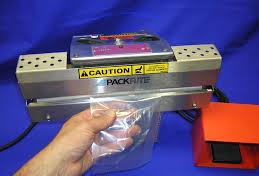 Impulse Sealers Jaw Sealer
Impulse bag sealers use an electrical pulse to temporarily heat the element when it is closed to seal the bag. Most often, impulse bag sealers are used to seal bags made from polyethylene (PE).
Constant Heat Sealers
Constant heat sealers sandwich the bag between two pre-heated metal bars. Since heating elements are always hot they can produce a much higher heat allowing the sealer to seal bags with higher melting points such as polycellophane, foil, and Mylar bags.
For more information about a specific jaw sealer, select one of the products below. If you have questions or need assistance in choosing the right jaw sealer machine, contact us.
Jaw Bag Sealers FAQs
- Plain jaw sealers use heated bars (constant heat or impulse) to fuse thermoplastic bag materials and are optimized for closures where air removal is not required.
- Vacuum jaw sealers utilize a retractable nozzle to evacuate air before the heated jaws clamp shut. This is ideal for reducing bag volume, preventing oxidation, and stabilizing shifting parts.
- N2/gas flush jaw sealers evacuate ambient oxygen from the bag and replace it with an inert gas (N2) or CO2) before sealing. This creates a pillowy, low-oxygen environment that protects fragile products from crushing and inhibits microbial growth.
- Impulse sealers apply a pulse of electricity to a heating element during the clamping cycle, followed by a cooling phase. They are engineered for linear low-density polyethylene (LLDPE), polypropylene (PP), and thin poly bags up to 10 mil thick.
- Constant-heat (rotary/bar) sealers maintain a continuous, regulated temperature on the sealing jaws. They are required for dense, heavy-duty barrier materials, such as thick multi-wall foil laminates, Mylar, and kraft paper gusseted valve bags.
A gas flush sealer is when product oxidation or degradation must be completely halted (e.g. nuts, coffee, dried fruits, pharmaceuticals, chemical powders, and electronic components. Contact our technical engineers to help selecting the best model that meets your needs.
Standard jaw lengths range from 15 inches to 50+ inches. Typical seal widths are ¼” (6mm) to ½”(12mm).
Vacuum sealers handle dusty products with a dual-stage multi-cyclone filters, retractable snorkel nozzles that draw air out gently, &/or a reverse-purge air cycle blowouts. Contact our technical engineers to help selecting the best model that meets your needs.
Yes, jaw sealers can utilize validatable digital controllers to monitor and log critical processing variables (temperature, dwell time, and clamping pressure). Contact our technical engineers to help selecting the best model that meets your needs.
Yes, installation, training, and/or service contracts are available. Contact us for additional information
The warranty period is established by the manufacturer and is typically 12 mos.